
An interview with Olan Monk
Alongside two new live performance videos, the Conamara musician speaks about sean-nós, experimentation, and embracing the essential openness of tradition

On the face of it, ‘Púcán Mhicil Pháidín’ is a pretty simple song. Attributed to the late nineteenth-century poet Seán Bacach Ó Guairim, and best known from the repertoire of sean-nós luminary Joe Heaney, it tells the story of a Conamara fisherman and his boat – a small Galway hooker, or púcán – on the day of a local regatta, when sailors came from across the region to race around the bay. Stitched into the tune’s narrative thread, however, are a dozen little details that illuminate the world our unassuming protagonist inhabits. Peppered with place names, local landmarks and anecdotal asides, it reveals the social fabric of Ireland’s rural west coast at that time, and the everyday lives of those who called it home.
“A lot of sean-nós songs sound like someone just stepped out of their house and started narrating their experience,” says Olan Monk, whose 2025 album Songs for Nothing was inspired in part by this deep-rooted singing tradition, if not in sound, then at least in spirit. “That’s what I was trying to channel.”
Having spent their 20s living abroad, in cities like Lisbon, Porto and London, the Indreabhán musician returned to Galway in 2022 to work on their second LP: a follow-up to 2020’s Love/Dead and 2021’s Auto Life EP, two suites of gothic art rock that paired their grungy guitars with sub-crushing bass synths, industrial cloud rap beats and pitched-down, witch house-coded vocals. Reconnecting with the environment and culture they’d grown up in, Monk found themselves increasingly weaving elements of Irish traditional music into this greyscale palette, recontextualising instrumental and stylistic ingredients in ways that resonated with their own practice.
The result, which arrived on AD 93 in November and was among my favourite Irish records of the year, has continued to reward repeat listens in the months since its release. Across its 10 tracks, Monk pays homage to Conamara and its people with a mix of nocturnal noise pop and contorted folk references, all while subtly navigating age-old questions on the nature of home – of leaving and returning, of memorialised ruins, lost futures and fractured identities, and the complex knots and contradictions that inevitably come with being “from” anywhere at all.
It’s an overcast February evening when I speak to Monk over a video call. They’re in Athenry, parked across from a dilapidated Dominican priory in a SEAT Ibiza, the same car they reference in ‘10 Days’, a song that depicts them driving around Conamara, going “nowhere fast” as their past and present collide. “I can’t deny that I have tried and failed to be somebody else,” they croon over crunching guitars, breakbeats, harp trills and flute. “It finds me so blindsided to wake up here and not be somewhere else.”
“Maybe the SEAT Ibiza is like my púcán,” they say with a smirk, nodding to the diaristic sean-nós influence that permeates the album. They’re half joking, careful not to over-egg it or risk any hint of disrespect, but the truth is that, even if you can’t hear it, there’s an essence of the unaccompanied vocal style coursing through the record’s circulatory system, absorbed as if by osmosis and carried down capillaries of distortion and drone.
“In some ways, I regret ever mentioning sean-nós in relation to the album,” they admit. “If it had been more of an obscure sort of shadow influence it almost would have done it more justice. But in trying to write about the record [in press materials], I was just trying to be honest about what I was really surrounding myself with. When I came back to Ireland three years ago, I was obsessively listening to sean-nós from the west of Ireland, specifically from Conamara – people like Sarah Grealish, Nora Grealish, Michael Frank Ó Confhaola and Dara Bán Mac Donnchadha.”
It’s not like they weren’t into this stuff before; listen to their NTS Radio broadcasts from down the years and you’ll hear songs like ‘Róisín Dubh’, ‘Amhrán Mhaínse’ and ‘Amhrán Na Trá Báine’ next to cuts from Dean Blunt, Gabber Modus Operandi, and friends like Seán Being, Baptist Goth and Lugh. But the immersion they experienced on returning, having set themselves up in a tiny-house-slash-studio near their family home, took things to another level. They started attending sean-nós classes at Galway University, taught by Spidéal-born singer-in-residence Mairéad Ní Fhlatharta, where they learned the ornamental style through songs like ‘Sagart na Cúile Báine’ and ‘An Abhainn Mhór’. They mingled with people from all walks of life there, each looking to immerse themselves in the Irish language through music.
“I thought there was going to be some very serious conversations about technique and what to do and what not to do to respect the tradition,” they recall. “But there was none of that. It was just, ‘Let’s sing these songs together. Come in next week, we’ll learn a new song. And then another. It doesn’t matter who you are in this class’. There were people in there with varying levels of Irish, people from different backgrounds. There was such an openness to it.”
That openness – which they also felt reflected in Sinead O’Connor’s 2002 album Sean-Nós Nua – in turn informed the approach they took with writing Songs for Nothing. “I’d gone through making heavily auto-tuned vocal stuff, and I’d come out of it wondering what it would sound like if I turned that off and let the pitches in between, the drift of sean-nós, come into it,” they say. “But I’m not really a singer; I’m more of a songwriter and a lyricist, and a lot of my vocals are spoken. There’s a virtuosity to sean-nós singing, which I really appreciate, but for me it was more about sean-nós being the song tradition of the place that I grew up in. It informs the place; it’s the music of this landscape.”
Taking cues from Bob Quinn and Manchán Magan, whose works so often touched on the symbiotic relationships of topography and music, Monk fed all this into their own creative framework. “I wanted to write songs that spoke to the environment around me. I spoke about my experiences in that environment. That also related thematically to some of the things explored in sean-nós: love and loss and emigration.”
You might sense it in the stream of consciousness lyricism of ‘Can’t Wait’, which threads field recordings from a walk along the Cois Fharraige coastline into its arrangement of string loops, mechanised beats and crushed guitars. “The sea and the coastline where I live has been such a huge inspiration,” they say. “While I was making the record I spent a lot of time just walking the coast and really trying to get to know the rocks and the sand and the weather.”
The album ends on an instrumental rendition of ‘Amhrán Mhaínse’, a sean-nós song written by Máire Ní Chlochartaigh about wanting to be buried in your homeland amongst your people, reconfigured by Monk with slow-mo accordion sighs and overdriven guitar quakes. “I think experimental music and sean-nós have a lot more in common than a lot of the other genres that are often combined,” they say. “Sean-nós is some of the most radical music you can hear. That merging is what I want to explore, rather than creating a more palatable or sellable experience”.
Central to the weather-beaten chassis of Songs for Nothing is the tin whistle, an instrument that Monk, like so many children growing up in Ireland, was taught in school and promptly gave up in their teenage years. Throughout the album, they play it as a ten-year-old might – loosely, with an almost crude sense of abandon and disregard for sounding “right”. In ‘Down 3’, its melody twists and meanders like a backroad, while layers of rough-hewn harmony underscore the fuzzed-out production of ‘Oatmilk’ and ‘Pomegranate’. In ‘Drón Feadóige’, its sound is like a hawk’s screech against a gale, soaring on howling gusts of guitar.
“There’s almost a punk ethos there,” they say. “If you’re going to pick up a tin whistle, you could blast it the same way you try to create feedback through a guitar amp. I think a lot of people find that jarring, but that’s kind of the joy of it. There’s a freedom in reclaiming these instruments and knowing that you can play them however you want. They are tools to be used. They have their traditions, they have their histories, but I feel like they have the same freedom as when you pick up anything. There’s a joy in picking up a tin whistle like a child for the first time. That was mainly what I felt when I started to work with the Irish traditional instrumentation on the record – it was a childlike joy.”
“I do feel like there is sometimes this fear that if you’re not virtuosic in the Irish language, or if you’re not virtuosic with an Irish instrument, then you should leave it to the pros,” they add. “I’m trying to go beyond that disposition. It doesn’t speak to me and it doesn’t speak to the people I work with.”
Monk assembled a trad session’s worth of co-conspirators to work on Songs For Nothing. Dylan Kerr and Róisín Berkeley weave flute and harp passages through the scuzzy foundations of ‘10 Days’, while Risteárd Ó hAodha’s cello morphs into the overdriven grooves of ‘Pomegranate’ and the Black Metal-esque ‘Blank Page’. In opening track ‘Corp’, the deep rumble of Aindriú De Buitléir’s bodhrán billows around Monk’s Angelus-like piano gongs and Peadar Tom Mercier of Trá Pháidín’s violin, creaking and groaning like a rusty weathervane in a storm.
Maria Somerville, a close friend from home, sings on the sort of Deftones-y ‘Down 3’ and ‘Fate (Reprise)’, a reimagining of a track from Love/Dead. It was a favour returned, with Monk having been amongst the collaborators on her own Conamara-inspired album, Luster, lending additional guitar parts to ‘Stonefly’.
Many of Monk’s collaborators are also based in the west of Ireland, where they’ve increasingly felt part of a small but bustling ecosystem of artists working on the fringes. “Some of the people who perform on the record are amazing traditional instrumentalists, but they’re also experimental musicians,” they say. “These things are closer, I think, than people sometimes allow.”
They point to the endeavours of Gliogar, an Irish language collective founded by Mercier, Ó hAodha and de Buitléir who have spent the past four years programming events that showcase music at this experimental intersection, taking “weirdo ceol” to Gaeltacht areas around the country. Monk played one of these at Seanscoil Sailearna in Indreabhán, down the road from their family home, in July 2023 alongside avant electronic sean-nós artist Róis and Gaeilgeoir jazzers Spásas. “It was the same day we’d heard Sinead O’Connor had died,” recalls Monk. “We were all feeling it. It was very strange to perform, having just heard that… But it was a crazy gig for me. I translated my songs into Irish for it. Some of my family and their friends were hearing me perform this music for the first time.”
It’s not that Monk works exclusively with artists from the west of Ireland – just listen to their link-up with London post-rock outfit Moin, or their input on Sacramento witch house artist Ghost Mountain’s ‘Familiar Stranger’ – but something about the Songs For Nothing call sheet being predominantly thus does feed into the album’s overall thematic thrust. When so many of their own generation left, themself included, due to a lack of opportunities and the ongoing dearth of housing, to create a record that showcases its young alternative music community now, while simultaneously reflecting on the region’s long history of displacement and lasting socio-economic challenges, feels deeply pertinent.
They point to the ruin across the road from where they’re parked. “We’re constantly reminded of the movement of people and the destruction of housing and landlordism and all this stuff,” they say. “I live near an abandoned village, and there’s no way out there. It’s just some stone structures. And I guess in some ways, there’s a ruined element to how I’ve approached sound sources on the record. Things are kind of half-sounding, pushed through an extreme filter or distortion. A lot of the references are half formed. There’s definitely an anger in there.”
It comes back to their desire to create work that speaks truthfully to the experience of life in Conamara, as distinct from the sanitised and stereotyped “Aran Jumperfication” that is so often peddled to tourists both at home and abroad. “We’re at risk of being reduced to a symbolic version of our own history,” they say. “Just an image with none of the complexity.”
“I do play into some of the ‘windswept’ imagery, for lack of a better term,” they admit. “Everything [in the album artwork] is grayed out. There is something in there that is the same as how the west of Ireland has long been portrayed, in terms of its natural qualities, but culturally there’s something different going on. I love my Aran knit jumper so much it’s unravelling, but I feel like everything turning into a shop selling this stuff to American tourists is not the Ireland any of us want.”
Growing up bilingually in a Gaeltacht area, having arrived with their family as a young child, the contradiction of singing songs so tied to Conamara in the English language is not lost on Monk, who emphasises their work’s existence in a post-colonial context. “I am making this Americanised music, whether I like it or not, and I know a lot of my listenership is in America, but what are they getting from this? If anything, I want them to realise that maybe the west of Ireland isn’t just the Cliffs Of Moher or whatever. Maybe there are some people living there who are also living complicated lives… I wasn’t going to make a record that said, ‘I’m from Ireland, Ireland’s great, I love the west of Ireland, it’s beautiful, you should come here on holiday. It had to say, ‘No, I live here, and it’s a privilege to be from here and grow up here – as it is to visit and to experience its landscape and culture’.”
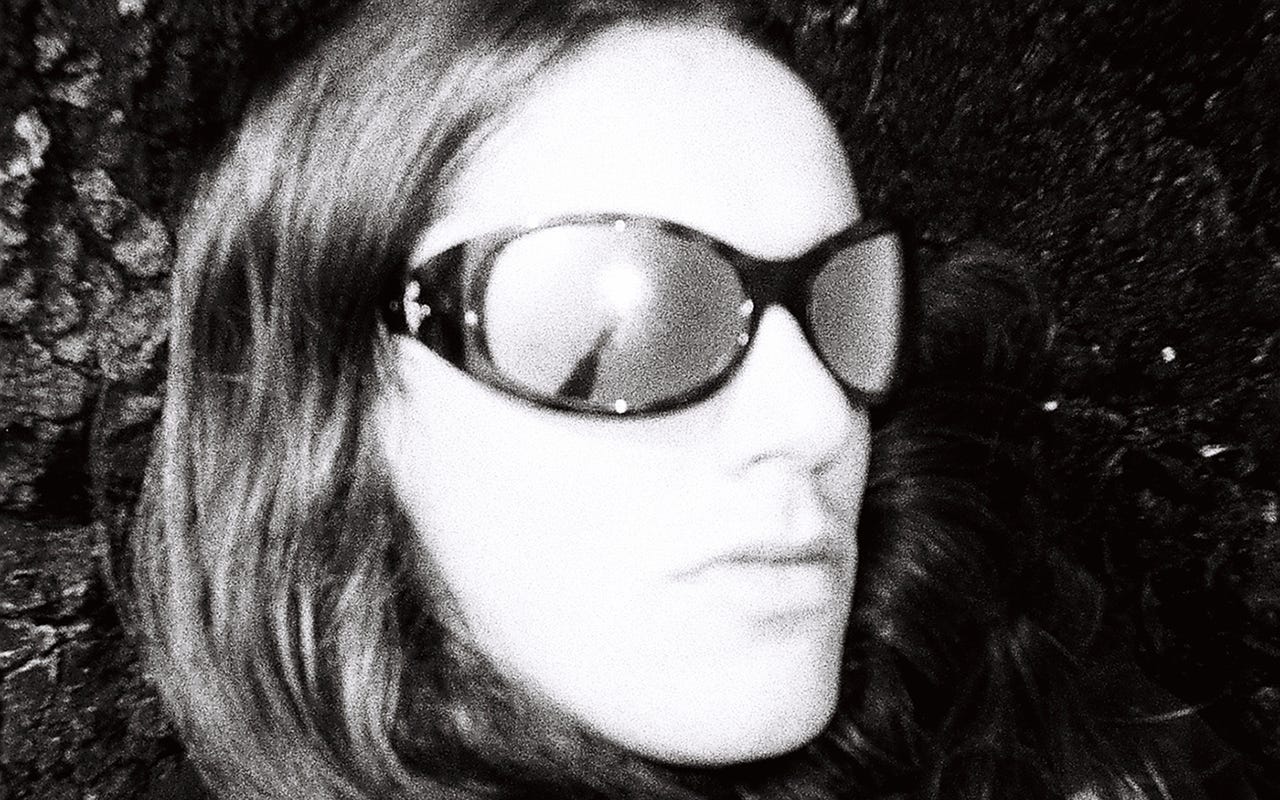
Ultimately, Monk’s tribute to their homeplace is double-edged: both a love letter and a lament. It’s reverential to the expansive and unforgiving landscape that emanates from its production, and to the storytelling and tradition that informs its lyrics, but it’s never mawkish or disengaged from the occasional harshness of reality. Like anywhere, you can adore the west of Ireland and owe huge parts of yourself to it without seeing it through synthetic green-tinted glasses.
“I’m trying to pay homage to the place and the people of that place and how they were so formative to me as a person and as a musician growing up,” they say “But I also know that I kind of landed in Conamara as a child, grew up there, and then left as soon as I was an adult. It was a very formative, specific time that I spent living there, and now I live there again. There’s a fracture … What is identity really? What is anyone’s relationship to one place or where they’re from? What is a song for anywhere?”
“The ‘nothing’ of the record is a false nothing,” they continue. “A lot of the west of Ireland is seen in terms of its emptiness, remoteness and isolation, but I was trying to pay homage to how full that proposed emptiness actually is, and how much life there is there.”
For Monk, the most important lesson in all of this is once again to be found in openness – in the ways tradition can adapt and evolve while simultaneously honouring its roots, which, we must remember, have always been wide-reaching. “In Irish traditional music, we have the bazouki, but we didn’t invent that,” they say. “Same with the mandolin. These were all introduced from abroad. [The music] is not just something that’s isolated to this area. It’s just that the links across cultures have been severed. I feel like the more people in Ireland engage with this, the more we’ll realise how much there is to gain from these things.”
“What we’re seeing in Ireland now which is so important is that people have diverse points of reference for their own sense of identity,” they add, nodding again to the inviting nature of the sean-nós classes they took at the university. “It made me realise that if there is a future in anything, in terms of our own traditions, it’s in [the fact that] anyone can take part.”
It’s a borderless attitude that will continue to feed into their own work too, no matter where it takes them next. “I’ve total freedom to do anything next,” they say. “I don’t feel any clear next move. I could take any of the four exits from that record and make another record, and I kind of hope to follow all of them.”
Find Olan Monk on Bandcamp and Instagram. Thanks for reading!